


In previous World Cup events, FIFA has successfully navigated complex immigration laws and entry requirements. For instance, Brazil implemented a law in 2014 allowing free temporary visas for ticket holders. Similarly, during the tournaments in Russia and Qatar, both nations utilized Fan IDs and Hayya cards as alternative entry documents, which also offered complimentary public transportation. However, the 2026 tournament finds FIFA entangled in stringent border policies from the Trump administration’s second term. Here’s a closer look at those affected by these changes.
Omar Artan’s Dilemma
Referee Omar Artan, one of the 52 officials chosen by FIFA for the tournament, faced entry denial upon his arrival in Miami. Artan was poised to become the first referee from Somalia to officiate at a World Cup.
FIFA acknowledged that he “will be unable to train and officiate,” distancing itself from the diplomatic fallout. The organization stated, “FIFA is not involved in host country immigration processes, including visa adjudications… it is ultimately the host government that determines who receives a visa and who is permitted entry.”
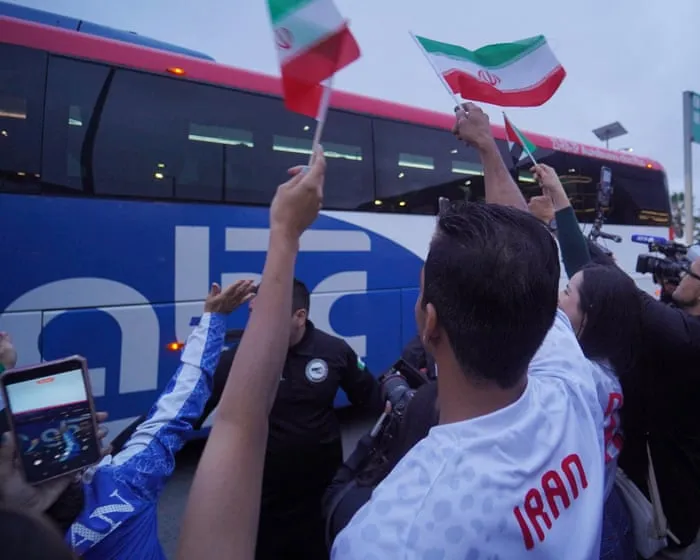
Reports indicate that at least 15 Iranian officials and staff members, deemed essential to the team’s success, have also been denied visas. While the U.S. claims it has allowed entry for all necessary support personnel, Iran’s football federation alleges that the co-hosts have withdrawn ticket allocations for their group matches, aiming to “hinder the presence of Iranian fans.”
“We are frustrated by this behavior,” remarked head coach Amir Ghalenoei. “This has certainly never occurred before.”
Iran has had to relocate its training sessions to Tijuana, Mexico. The team is now faced with the logistical challenge of traveling into the U.S. for their Group G matches in Inglewood and Seattle. Iran’s ambassador to Mexico suggested that the squad must enter and exit the U.S. on the same day as their games, complicating their ability to fulfill FIFA’s required pre-match media obligations, although this has been contradicted by Iranian state media.
Challenges for Iraqi Footballers
The ongoing international tensions involving Iran have adversely impacted Iraqi football. With U.S. consular services in Iraq suspended, securing standard visas has become nearly impossible.
For those who had previously obtained their paperwork, entering the U.S. has proven difficult. Aymen Hussein, a 30-year-old striker from Al-Karma, was detained and questioned for nearly seven hours at Chicago’s O’Hare airport before being allowed entry. Unfortunately, the team’s photographer, Talal Salah, faced a harsher fate; he was held for over 10 hours and ultimately denied entry after his phone was searched.
South Africa’s Delayed Departure

South Africa’s journey to the World Cup, where they are set to face Mexico in the opening match on June 11, has been significantly hampered by documentation issues. Following a celebratory parade, their chartered flight from Johannesburg to Mexico City was grounded due to several players lacking proper entry documents for Mexico.
This incident appears to stem from a lack of organization rather than any ill intent. South Africa’s sports minister, Gayton McKenzie, labeled the situation as “embarrassing and grossly unfair to the players and coaching staff,” attributing the blame to the South African Football Association.
Swiss Forward’s Visa Struggle
Switzerland forward Breel Embolo was compelled to join his teammates late in their Group B training camp due to complications with his U.S. entry visa. Reports suggest that the issue relates to a 2023 conviction involving multiple threats, for which the Rennes player received a suspended fine. Embolo had to make an urgent trip to the U.S. embassy in Bern to secure last-minute travel approval.
Scottish Fans Face Entry Issues
The Electronic System for Travel Authorization (Esta) process has also thrown British fans into disarray. Reports indicate that two families planning to support Scotland in their first World Cup since 1998 discovered their approved status unexpectedly revoked just days before their departure.
The Speirs brothers from Kirkcaldy had their Estas approved on December 14, only to see their status change to “travel not authorized” on June 3.
Travel Barriers and Rising Costs
For World Cup enthusiasts from countries outside the limited Esta scheme, the hurdles to entry are both financial and bureaucratic. While an Esta costs $40 (£30), the required visitor visa is priced at $185 (£140), a significant expense before even considering flight and ticket costs.
Since Donald Trump began his second term, the likelihood of entering the U.S. has drastically decreased. A sweeping travel ban restricts citizens from 39 countries from entering the U.S., while immigrant visa processing has been completely suspended in 75 nations.
Among the 48 teams competing in this World Cup, Haiti and Iran face total entry bans, whereas Côte d’Ivoire and Senegal encounter partial restrictions. Additionally, many nations experience U.S. visa rejection rates exceeding 40%, including Uzbekistan and Ecuador, along with several entrants from Africa and the Middle East.
Recently, the U.S. made a minor concession by waiving a $15,000 visa bond that could have impacted fans from five African nations—Algeria, Cape Verde, Côte d’Ivoire, Senegal, and Tunisia. For thousands of supporters, journalists, and officials, what was anticipated to be the largest World Cup in modern history is rapidly turning into the least accessible tournament ever.